If you have no credit history at all, you’re not behind. You’re just starting at the actual starting line. This guide shows you how to build credit from zero using the same handful of tools that work for almost everyone: a secured card, a credit builder loan, and a habit of paying on time.
There’s no trick here. Building credit from zero is slow on purpose, and that’s exactly why it works. Anyone can build credit from zero with patience and one boring, reliable account.
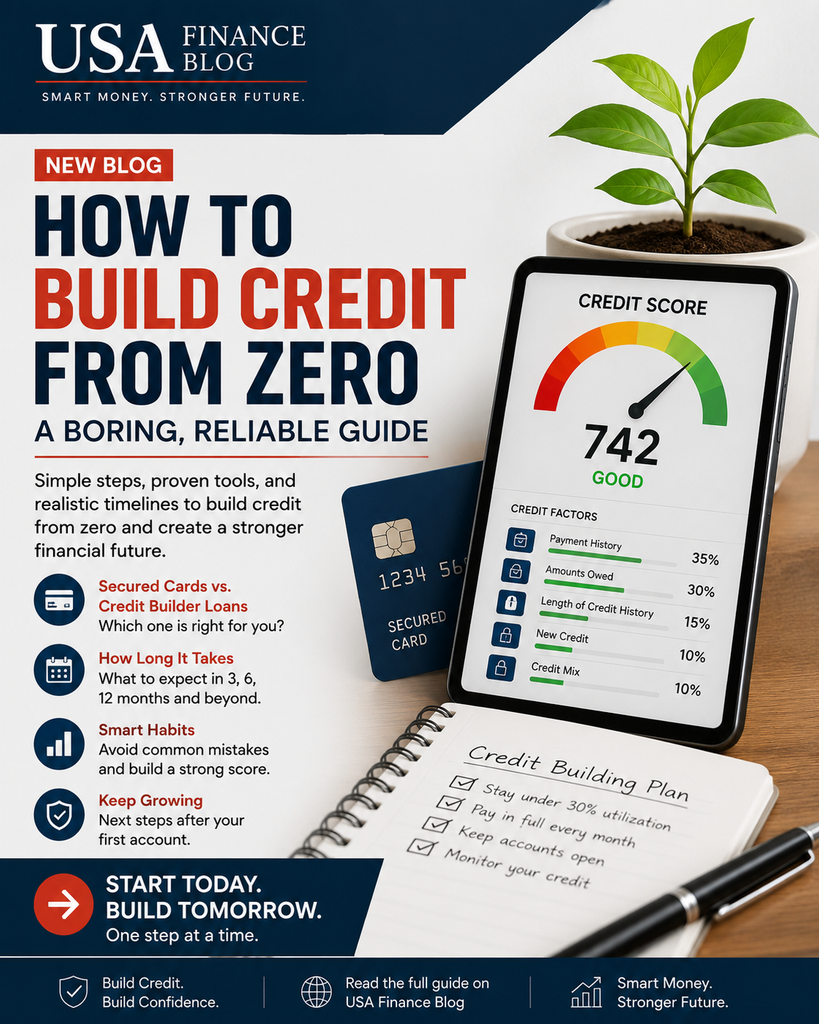
Why Building Credit From Zero Feels Confusing at First
Most credit advice assumes you already have a credit card, a car loan, or some kind of track record. When you’re trying to build credit from zero, none of that applies yet. There’s nothing for a lender to look at, which is its own separate problem from having bad credit.
The fix isn’t complicated. You need at least one account that reports to the three credit bureaus (Experian, Equifax, and TransUnion), and you need to pay it on time, every time. That’s genuinely most of the work.
You don’t need a co-signer, a big deposit, or a family member’s help to build credit from zero. Millions of people do it every year with a single starter account and a plain habit of paying bills on the due date, not the day before it’s late.
Two Reliable Ways to Build Credit From Zero
There are two accounts almost anyone can qualify for, even with no credit file at all.
Secured Cards vs Credit Builder Loans to Build Credit From Zero
A secured credit card asks you to put down a deposit, usually $200 to $500, which becomes your credit limit. You use the card for small purchases, pay the balance in full each month, and the issuer reports your activity to all three bureaus. This is the most common way people build credit from zero because approval isn’t based on a score you don’t have yet.
A credit builder loan works differently. The bank holds the loan amount in a locked account while you make monthly payments, and you get access to the money once the loan is paid off. Every on-time payment gets reported, so it builds a payment history without ever tempting you to spend more than planned.
Either option works. Many people use both at once to build credit from zero a little faster, since it adds a second reporting account without adding real spending risk.
How Long It Actually Takes to Build Credit From Zero
Expect three to six months before a FICO score even generates, since scoring models need a minimum amount of reporting history. After that, most people who build credit from zero and pay on time reach a fair to good range (roughly 630 to 690) within 6 to 12 months.
Reaching a very good or excellent score, generally 740 and above, usually takes longer, often one to two years of consistent payments and low balances. There’s no shortcut past this timeline, and anyone promising one is selling something.
Patience is the actual strategy here. The timeline to build credit from zero is set mostly by how scoring models weigh account age, so opening your first account earlier always beats waiting for the “perfect” card or loan offer.
A Numeric Example of Building Credit From Zero
Here’s a simple example using a secured card with a $300 limit.
| Month | Balance Used | Paid in Full? | Reported Utilization |
|---|---|---|---|
| 1 | $45 | Yes | 15% |
| 3 | $60 | Yes | 20% |
| 6 | $30 | Yes | 10% |
| 12 | $25 | Yes | 8% |
Keeping utilization under 30%, and ideally under 10%, is one of the biggest levers when you build credit from zero. In this example, the cardholder never carries a balance month to month, which avoids interest entirely while still building a full year of positive payment history.
If you want to see how your own numbers might play out, you can run your own build credit from zero timeline with our Credit Building Calculator, which estimates your likely score range based on account age, utilization, and payment history.
Small, boring numbers like these are the whole game. Nobody managed it with a clever trick; they did it by repeating a $30 to $60 purchase and a full payment, month after month, until the file simply had enough history to score.
Common Mistakes That Slow Down Building Credit From Zero
A few habits quietly undo the progress people make. Most of these mistakes come from treating a starter account like a normal card instead of a tool with one job: proving you pay on time.
- Applying for several cards at once, which adds multiple hard inquiries in a short window
- Carrying a balance on purpose, thinking it “helps” the score (it doesn’t; paying in full is fine)
- Closing the first card too early, which shortens your average account age
- Missing a single payment, since payment history carries the most weight in most scoring models
Avoiding these four mistakes matters more than any advanced strategy when you build credit from zero. Consistency beats cleverness every time.
Keeping Your Credit Growing After You Build Credit From Zero
Once you’ve built a file, the habits barely change. Keep paying every account on time, keep balances low relative to your limits, and let accounts age instead of closing them. When you’re ready for a second account, such as a regular unsecured card or a small auto loan, spread applications out by a few months so a batch of hard inquiries doesn’t land on your file at once.
It’s also worth checking your credit reports for errors at least once a year through AnnualCreditReport.com, the only site authorized by federal law to provide free reports from all three bureaus. The Consumer Financial Protection Bureau has plain-language guides on how scores are used and what to do if you spot an error.
Bottom Line
You don’t need a complicated strategy to build credit from zero. Open one account that reports to the bureaus, pay it on time every month, keep balances low, and give it time. It’s a boring plan, and that’s exactly why it’s reliable.
This is for informational purposes only and isn’t financial, tax, or legal advice.

Raghu Shekar writes about personal finance, banking, Medicare, and retirement planning at SimpleUSAFinance. His goal is simple: break down the numbers people actually need — no jargon, no sales pitch — so readers can make their own decisions with confidence. When he’s not writing, he’s usually digging through the latest rate changes, tax brackets, or Medicare updates to keep the site’s calculators and guides current.