Medicare Part D creditable coverage sounds like insurance jargon, but the letter that carries those words can save you thousands of dollars over your lifetime. Every fall, millions of Americans open an envelope from their employer, union, or drug plan and set it aside without reading past the first line. This guide breaks down what Medicare Part D creditable coverage actually means, why the notice arrives every year, and what happens if you lose that coverage without a backup plan. Understanding Medicare Part D creditable coverage now can prevent a costly surprise later.
What Medicare Part D Creditable Coverage Actually Means
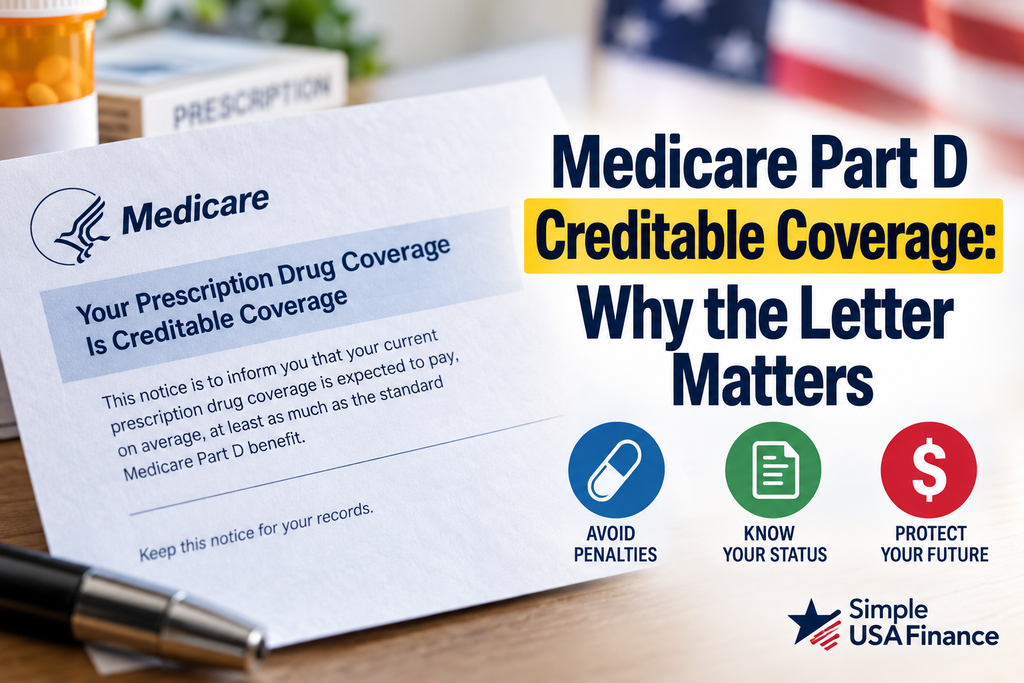
Medicare Part D creditable coverage is prescription drug coverage that is expected to pay, on average, at least as much as the standard Medicare Part D benefit. In plain terms, meeting this bar means Medicare treats you as if you already had Part D, even without enrolling.
This matters because Medicare does not simply ask whether you have a drug plan. It asks whether that plan is good enough to count. A plan sponsor determines Medicare Part D creditable coverage status using either an actuarial test or a simplified method set by the Centers for Medicare and Medicaid Services, and that determination is what gets printed on your notice. Every Medicare Part D creditable coverage notice traces back to that underlying test, whether or not the letter spells out the math.
How the Simplified Method Works
Under the simplified method, a plan’s coverage counts as creditable if it is projected to pay a set share of a typical member’s drug costs. For 2026, that share moved to 72 percent, up from 60 percent in prior years. A plan sponsor can also look at deductibles, cost sharing, and coverage limits compared with the standard Part D design to reach the same conclusion. None of this changes what you need to do: check the notice for the words that confirm your Medicare Part D creditable coverage status.
Why You Get This Notice Every Year
Employers and other plan sponsors that offer prescription drug coverage are required to send a Medicare Part D creditable coverage notice once every twelve months, generally before October 15, which is when the annual Medicare enrollment window opens. You also receive one whenever your plan’s drug coverage changes in a way that could affect its creditable status, and again if you ever ask for a copy directly.
The timing is not random. Medicare wants you to have this information in hand before you decide whether to join a Part D or Medicare Advantage drug plan during open enrollment. Without a current Medicare Part D creditable coverage notice, you are essentially deciding blind. Save each year’s notice separately, since a Medicare Part D creditable coverage letter from three years ago will not tell you anything about your coverage today.
What Happens If You Lose or Ignore Creditable Coverage
If your prescription drug coverage stops being creditable, or if you go without any drug coverage at all, the clock starts running. A gap of 63 days or more in a row without Medicare Part D creditable coverage can trigger a late enrollment penalty once you eventually join a Part D plan. This is the single most expensive misunderstanding people have about Medicare Part D creditable coverage: only creditable coverage actually protects them.
That penalty is not one time. It is added to your monthly Part D premium for as long as you have Part D coverage, often for life.
How the Late Enrollment Penalty Is Calculated
The penalty formula is 1 percent of the national base beneficiary premium for every full month you went without Medicare Part D creditable coverage, rounded to the nearest ten cents. Because the formula multiplies by every month without Medicare Part D creditable coverage, even a short gap adds up faster than most people expect. In 2026, that base premium is $38.99. Here is what that looks like in practice.
| Months Without Creditable Coverage | Penalty Percentage | Estimated Monthly Penalty Added in 2026 |
|---|---|---|
| 6 months | 6 percent | $2.30 |
| 12 months | 12 percent | $4.68 |
| 24 months | 24 percent | $9.36 |
| 36 months | 36 percent | $14.00 |
That last row means a three year gap adds $14 a month to your Part D premium for the rest of your time on Medicare, more than three thousand dollars over a twenty year retirement.
Reading Your Creditable Coverage Notice Line by Line
A genuine Medicare Part D creditable coverage notice usually opens with a plain statement telling you whether your current plan is creditable or not, so you rarely need to hunt for the answer. Look for language that says your coverage is “expected to pay on average as much as” the standard Medicare drug benefit. That single sentence is doing all the work. If the line about Medicare Part D creditable coverage is missing or unclear, call the number on the notice and ask directly.
Below that, most notices explain your options, including when you can join a Medicare drug plan without a penalty and how to request Extra Help if you have limited income. Keep the letter. If you join a Part D plan later, you may be asked to prove your coverage history, and the notice is your proof.
Creditable Coverage and the Medicare Part D Enrollment Period
The annual Medicare Part D enrollment period runs from October 15 to December 7 each year, and your creditable coverage notice is designed to land in your mailbox right before it starts. If your employer or union coverage carries Medicare Part D creditable coverage status, you generally have no reason to rush into a separate Part D plan while you are still covered.
If your coverage is not creditable, or if you are losing employer coverage soon through retirement, this enrollment window, or a special enrollment period tied to that life event, is when you want to act. Waiting past your window without Medicare Part D creditable coverage in place is exactly how the penalty calculation above gets triggered. Confirming your Medicare Part D creditable coverage status early gives you the full window to compare plans without penalty risk.
Anyone weighing Part D enrollment alongside Medicare Part B often finds it useful to see the full premium picture at once, including income related surcharges. SimpleUSAFinance’s IRMAA Calculator lets you estimate your combined Part B and Part D costs for the current year before you commit to a plan.
What To Do With the Letter Right Now
Do not file the notice away unread. Confirm whether it says your coverage is creditable or non creditable, note the date on the letter, and store it somewhere you can find it during open enrollment. If it says your coverage is not creditable, mark your calendar for the next enrollment window so you do not drift past 63 days without coverage.
If you switch jobs, retire, or your employer changes drug benefits midyear, ask for an updated notice. Plan sponsors must also file this creditable coverage status with the Centers for Medicare and Medicaid Services each year, separate from the letter mailed to you. Read more directly on CMS.gov. For the beneficiary side of the penalty rules, Medicare’s own explanation is available at Medicare.gov.
Bottom Line
Medicare Part D creditable coverage is the difference between a smooth transition onto a drug plan later and a penalty that follows you for the rest of your life. Read the letter the day it arrives, confirm your status, and keep it somewhere safe until you actually need it.
This is for informational purposes only and isn’t financial, tax, or legal advice.

Raghu Shekar writes about personal finance, banking, Medicare, and retirement planning at SimpleUSAFinance. His goal is simple: break down the numbers people actually need — no jargon, no sales pitch — so readers can make their own decisions with confidence. When he’s not writing, he’s usually digging through the latest rate changes, tax brackets, or Medicare updates to keep the site’s calculators and guides current.