A multi currency checking account lets you hold, spend, and sometimes even receive money in more than one currency from a single account, without paying a fresh conversion fee every time you cross a border. For anyone who travels more than once or twice a year, choosing a multi currency checking account over a standard bank account can mean the difference between losing money to fees and keeping it in your pocket. This guide explains what a multi currency checking account actually does, how the fees compare to an ordinary checking account, and how to pick one that fits the way you actually travel.
What a Multi Currency Checking Account Actually Does
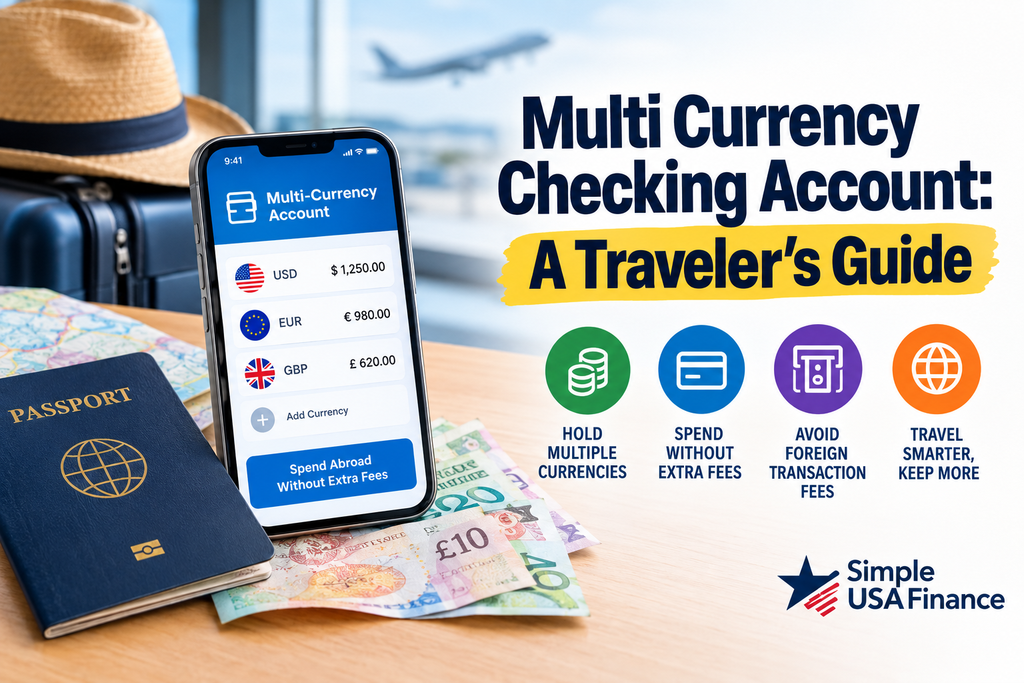
A multi currency checking account works like a regular checking account, except it can hold balances in several currencies at once, usually U.S. dollars alongside euros, British pounds, or other major currencies. When you spend abroad, the account draws from the matching currency balance instead of converting on the spot, which is where most of the savings come from.
Providers such as Wise and Revolut popularized this model in the United States, and several traditional banks have since added similar features to compete. A true multi currency checking account differs from a simple travel debit card because it actually holds the foreign currency, rather than just waiving a fee on a dollar based purchase. That distinction matters most when exchange rates move quickly, since holding the currency ahead of time locks in the rate you saw when you converted, not the rate on the day you happen to spend.
How a Multi Currency Checking Account Differs from a Travel Debit Card
A travel friendly checking account might simply waive foreign transaction fees on a normal dollar account, which helps but still relies on your bank’s exchange rate at the moment of purchase. A genuine multi currency checking account goes further by letting you convert money in advance, lock in a rate you like, and spend it later without a second conversion. Both options beat a standard account, but a multi currency checking account gives you more control over timing.
Why Foreign Transaction Fees Matter So Much
Most standard debit and credit cards charge a foreign transaction fee of 1 to 3 percent on every purchase made outside the United States or processed through a non U.S. bank. A multi currency checking account is built specifically to avoid this charge on purchases made in a currency you already hold.
That 1 to 3 percent might sound small, but it applies to every swipe, every meal, and every hotel bill on a trip. Someone spending $3,000 during a two week vacation could pay an extra $30 to $90 in fees with a standard account and pay nothing with a multi currency checking account.
The Real Cost Difference: A Numeric Example
Here is what the same trip looks like with a standard checking account compared with a multi currency checking account.
| Spending Abroad | Standard Account Fee (1% to 3%) | Fee With This Account |
|---|---|---|
| $500 | $5 to $15 | $0 |
| $1,500 | $15 to $45 | $0 |
| $3,000 | $30 to $90 | $0 |
| $6,000 | $60 to $180 | $0 |
ATM withdrawals abroad tell a similar story. A traveler making ten withdrawals of $200 each on a two week trip could pay roughly $110 in combined foreign and out of network ATM fees with a standard account, versus little to nothing with a fee free multi currency checking account or a travel friendly checking account that reimburses ATM charges.
What to Look for in a Travel Friendly Checking Account
Not every account marketed for travelers is a true multi currency checking account, so it helps to know what to check before you apply. Look at whether the account actually holds foreign currency balances or simply waives fees on dollar transactions, since the first option protects you from exchange rate swings and the second does not.
Also check the ATM reimbursement policy, since a multi currency checking account with no fees on card purchases can still charge for cash withdrawals above a certain monthly limit. Finally, confirm which currencies the account supports, since a multi currency checking account built around euros and pounds will not help much on a trip built around a currency it does not carry. Some providers also add a small markup once you exceed a monthly conversion limit, so it helps to know that ceiling before you travel rather than after.
Fine Print That Catches Travelers Off Guard
Some accounts advertised as a multi currency checking account cap the number of free ATM withdrawals per month or charge a small fee once you cross a spending threshold. Others require a minimum balance or a linked direct deposit to unlock full fee waivers. Reading the fee schedule before you leave home avoids an unpleasant surprise mid trip. It also helps to check whether the account reports to any credit bureau or charges a fee for closing the account within the first year, since some travel focused accounts are built around short term use.
Choosing the Right Account for Your Trip
For someone taking one international trip a year, a travel friendly checking account that simply waives foreign transaction fees may be enough, since the savings from a full multi currency checking account may not offset any extra setup. For frequent travelers, remote workers paid in foreign currency, or anyone regularly billed in euros or pounds, a true multi currency checking account usually pays for itself within a single trip.
If you are deciding whether to keep a large travel fund sitting in cash or put part of it to work while you plan your trip, SimpleUSAFinance’s CD Growth Calculator can show what that money would earn in a short term CD instead of sitting idle before your trip.
A multi currency checking account is not the only way to avoid fees abroad, and it is worth comparing it against a plain no fee debit card if your travel is occasional rather than frequent. Either way, the goal is the same: stop losing 1 to 3 percent of every purchase to a fee you never had to pay.
According to the Consumer Financial Protection Bureau, a foreign transaction fee is calculated as a percentage of your purchase or withdrawal amount, and you can read the full breakdown on ConsumerFinance.gov. For details on how these fees are legally defined and disclosed, see the CFPB’s official regulation text on ConsumerFinance.gov.
Bottom Line
A multi currency checking account can save frequent travelers real money by holding foreign balances instead of converting on the spot every time you spend. Compare your actual travel pattern against the fees and minimums of each account before you switch, since the best choice depends on how often you cross a border, not just which account has the best marketing.
This is for informational purposes only and isn’t financial, tax, or legal advice.

Raghu Shekar writes about personal finance, banking, Medicare, and retirement planning at SimpleUSAFinance. His goal is simple: break down the numbers people actually need — no jargon, no sales pitch — so readers can make their own decisions with confidence. When he’s not writing, he’s usually digging through the latest rate changes, tax brackets, or Medicare updates to keep the site’s calculators and guides current.