Your credit utilization ratio can swing your credit score by dozens of points in a single billing cycle, faster than almost any other factor lenders track. It is simply the percentage of your available credit that you are currently using, and because it gets recalculated every month, it moves fast in both directions. Here is exactly what a credit utilization ratio is, how it is calculated, and why paying attention to it can lift your score quickly.
What a Credit Utilization Ratio Actually Is
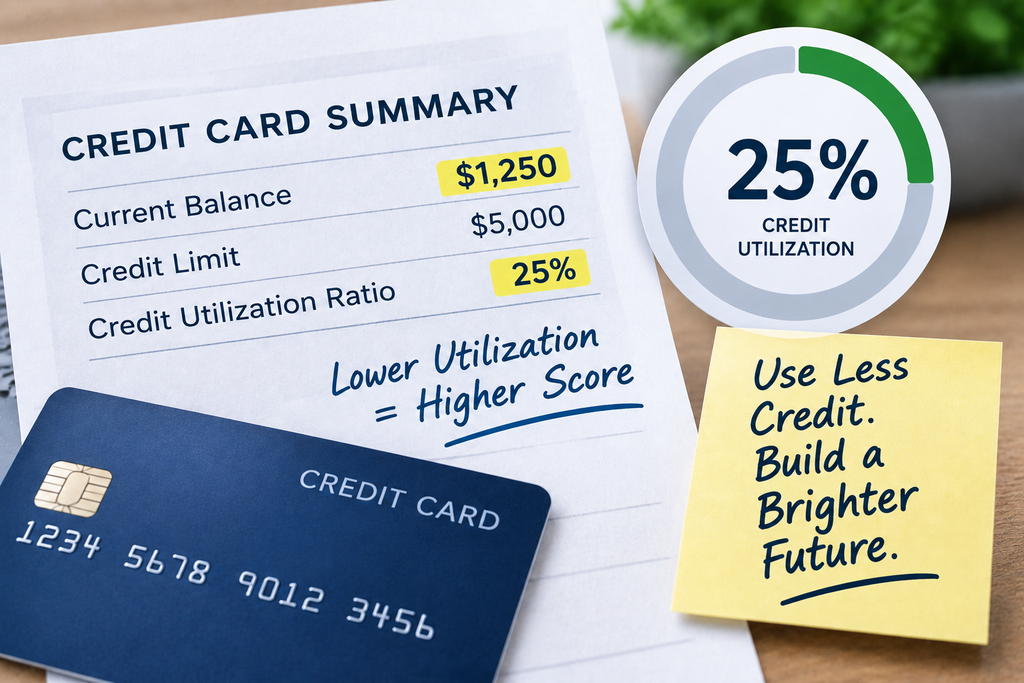
A credit utilization ratio compares how much you owe on revolving credit, mainly credit cards and lines of credit, against your total available credit limit. Divide your total balances by your total credit limits, then multiply by 100, and that percentage is your credit utilization ratio.
If you owe 3,000 dollars across cards with a combined 10,000 dollar limit, your credit utilization ratio is 30 percent. Lower that balance to 1,000 dollars with the same limit and your credit utilization ratio drops to 10 percent, without you doing anything else to your credit file.
Overall Ratio Versus Per Card Ratio
Scoring models look at two numbers, your overall credit utilization ratio across every card combined and the ratio on each individual card. A person with 5 percent overall utilization but one card sitting at 95 percent can still score lower than someone spreading that same balance evenly across several cards, so a single maxed out card matters even when your total looks fine.
Why It Moves Your Score So Fast
Your credit utilization ratio makes up roughly 30 percent of your FICO score, second only to payment history. Unlike your length of credit history or your mix of account types, which change slowly over years, your credit utilization ratio is recalculated every time a card issuer reports your balance, usually around your statement closing date.
That means a single high spending month can drag your score down almost immediately, and paying that balance down before the next statement closes can lift your score back up just as quickly. Few other factors respond to a single decision this fast.
What Counts as a Good Credit Utilization Ratio
The well known rule says to keep your credit utilization ratio under 30 percent, but that number is really a ceiling, not a target. Recent scoring data shows the real benefit sits much lower.
| Utilization Range | General Impact |
|---|---|
| 1 to 3 percent | Associated with the very highest scores |
| Under 10 percent | Considered excellent by most scoring models |
| 10 to 30 percent | Generally fine, though not optimal |
| Above 30 percent | Starts pulling your score down noticeably |
| 0 percent | Can slightly hurt, since it shows no active credit use |
A credit utilization ratio of exactly zero is not actually the goal. Scoring models want to see that you use credit responsibly, not that you avoid it completely, so a small reported balance each month tends to score better than no balance at all.
How to Lower Your Credit Utilization Ratio Quickly
Because your credit utilization ratio resets with each reporting cycle, a few quick moves can improve it before your next statement closes.
Pay down your balance before the statement closing date rather than the payment due date, since the statement date is usually what gets reported to the credit bureaus. Ask for a credit limit increase on an existing card, which lowers that ratio immediately as long as your balance stays the same. Keep old, unused cards open, since closing them removes their limit from your total available credit and raises that number on paper. Spread balances across multiple cards instead of concentrating debt on one, since a single high balance card can hurt even when your overall number looks reasonable.
A Real Example of the Fix
Someone with three cards, a 5,000 dollar limit with a 1,000 dollar balance, a 10,000 dollar limit with a 4,000 dollar balance, and a 1,000 dollar limit with a 750 dollar balance, has a combined credit utilization ratio of about 36 percent. Paying the second card down to 2,000 dollars alone drops that same ratio to about 23 percent, a meaningful shift from one payment.
Common Myths That Confuse the Number
A few misconceptions cause people to make the wrong move. Some assume carrying a small balance and paying interest builds credit faster than paying in full, which is false. Interest charges do nothing for your score, and paying your statement balance in full each month while still showing a reported balance works just as well for scoring purposes.
Others assume closing a paid off card helps their credit file by removing temptation. In most cases it does the opposite, since it shrinks your total available credit and can push your overall number higher even though your actual spending has not changed. Unless the card carries an annual fee you no longer want to pay, keeping it open with no balance usually helps more than closing it.
A third myth is that checking your own balance or running a soft credit check affects this number. It does not. Only your reported balances and credit limits factor into the calculation, and looking at your own accounts never counts against you. Hard inquiries from new applications can ding your score slightly through a different factor entirely, but simply monitoring your existing accounts is always safe and free.
Paying Down Debt for the Long Term
A quick fix before a statement date helps in the short term, but building a real plan to pay down revolving balances keeps your credit utilization ratio low every month instead of just before a big application. The Debt Payoff Calculator on SimpleUSAFinance can help you map out how fast a specific payment plan would bring your balances and your credit utilization ratio, down for good.
For more detail straight from a major scoring source, myFICO’s guide on the credit utilization ratio and FICO scores walks through how the calculation factors into your overall score.
Suggested Image: A credit card statement with a highlighted balance and limit line, next to a small percentage gauge. Alt text: “Credit utilization ratio shown as a percentage of balance against credit limit”
Bottom Line
Your credit utilization ratio is one of the fastest moving pieces of your credit score, recalculated every billing cycle rather than drifting slowly like your credit history. Keep it under 30 percent, aim closer to 10 percent if you can, and watch both your overall number and each individual card.
This is for informational purposes only and isn’t financial, tax, or legal advice.

Raghu Shekar writes about personal finance, banking, Medicare, and retirement planning at SimpleUSAFinance. His goal is simple: break down the numbers people actually need — no jargon, no sales pitch — so readers can make their own decisions with confidence. When he’s not writing, he’s usually digging through the latest rate changes, tax brackets, or Medicare updates to keep the site’s calculators and guides current.