For decades, a rejected check or a bounced payment triggered an automatic charge. Banks called it an NSF fee, short for non sufficient funds, and it typically ran between 25 and 40 dollars per incident, sometimes stacking two or three times in a single day. That pattern is fading fast. A wave of major banks has quietly dropped NSF fees altogether over the past few years, and regulators have pushed the rest of the industry toward the exit.
This guide explains what NSF fees actually are, why so many banks have stopped charging them, which major banks still do, and how to make sure you never pay one again.
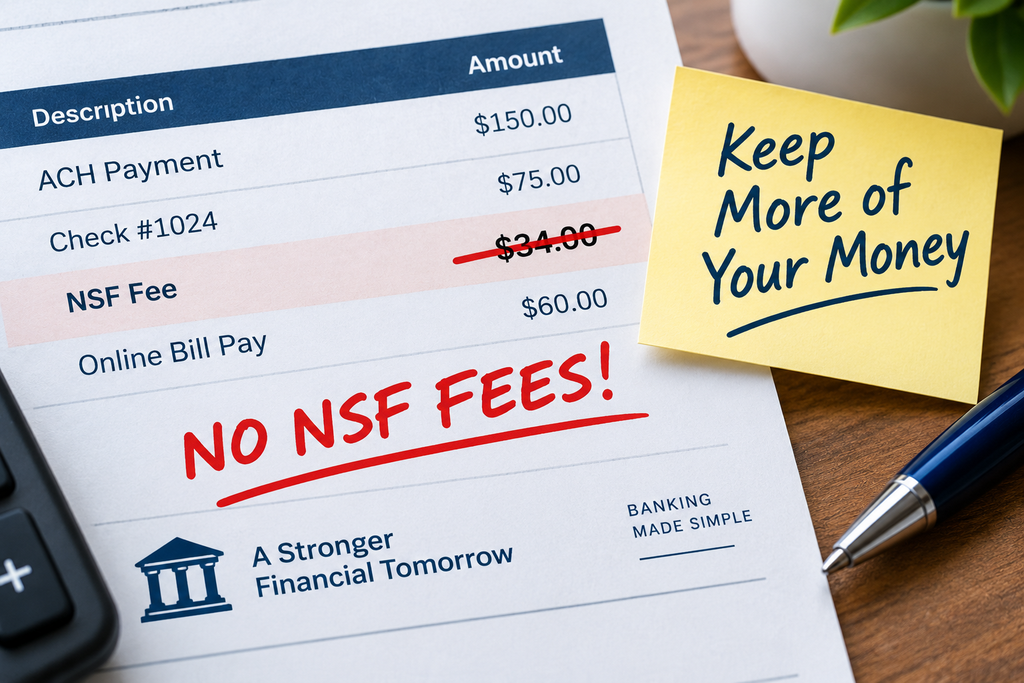
What an NSF Fee Actually Is
An NSF fee is charged when your bank refuses to process a payment, a check, an ACH debit, or a bill pay transaction, because your account does not have enough money to cover it. The transaction bounces back to whoever you were paying, and your bank charges you a fee for the failed attempt.
This is different from an overdraft fee. With overdraft, the bank pays the transaction anyway and lets your balance go negative, then charges you for covering the gap. With NSF fees, the bank simply refuses the payment and returns it unpaid. Same low balance, two very different outcomes and two very different fee structures.
Why the Distinction Matters for Your Wallet
Some accounts charge only overdraft fees, some charge only NSF fees, and a few used to charge both on the same missed payment. Knowing which policy applies to your account tells you exactly what a low balance mistake will cost you.
Why Banks Are Dropping NSF Fees
The shift did not happen out of goodwill alone. Regulatory pressure, competition from online banks, and years of public criticism over what critics called junk fees all pushed traditional banks to reconsider NSF fees as a revenue source. Once one major bank dropped them, customers at other banks started asking why theirs still charged for a declined transaction that cost the bank almost nothing to process.
Federal banking regulators have also examined NSF fee practices closely. An analysis by the Consumer Financial Protection Bureau found that nearly two thirds of banks with more than 10 billion dollars in assets have eliminated NSF fees entirely, and the banks that generated the most NSF fee revenue historically are disproportionately represented among those that dropped them.
Which Major Banks Have Eliminated NSF Fees
Capital One, Citibank, Wells Fargo, Bank of America, JPMorgan Chase, and PNC have all eliminated NSF fees on consumer checking accounts within the past few years. Ally Bank and Discover never charged them in the first place on their core checking products. Online only banks and fintech apps have largely skipped NSF fees from day one, since their entire pitch to customers rests on avoiding traditional bank fees.
Community banks and credit unions have moved more slowly. Many still charge somewhere between 25 and 35 dollars per NSF fee, so it is worth checking your specific account agreement rather than assuming your bank has followed the larger trend.
The Timeline Behind the Shift
Capital One moved first in 2022, dropping both overdraft and NSF fees on its consumer checking accounts in one announcement. Citibank followed within months, becoming the largest bank at the time to eliminate NSF fees completely. Bank of America took a middle path, cutting its overdraft fee sharply while removing them outright, and several regional banks made similar moves through 2023 and 2024.
By 2026, industry data shows the pattern has become the norm rather than the exception among large banks, even though plenty of smaller institutions have not caught up yet. Watching your own bank’s fee schedule update, and comparing it against competitors, is the easiest way to know whether you are still paying for something most large banks have already given up on charging.
A Quick Numeric Comparison
Here is how the shift plays out in real dollars for someone who has three payments bounce in a single month, a fairly common scenario for anyone living close to their balance.
| Bank Type | Fee Per Incident | Cost for 3 Incidents |
|---|---|---|
| Traditional bank still charging NSF fees | 34 dollars | 102 dollars |
| Bank that eliminated NSF fees | 0 dollars | 0 dollars |
| Community bank or credit union | 25 to 35 dollars | 75 to 105 dollars |
That is a full tank of gas, a week of groceries, or a utility bill, depending entirely on which bank holds your checking account. Multiply that across a full year and the difference between a bank that still charges NSF fees and one that does not can easily top 500 dollars for someone who occasionally runs low.
How to Avoid NSF Fees No Matter Where You Bank
Even at banks that still charge NSF fees, a few habits keep you from ever seeing one on your statement.
Turn on low balance alerts through your bank’s app so you get a warning before a payment is scheduled to go through. Link a savings account for automatic overdraft transfers, which usually cost far less than an NSF fee even when a small transfer fee applies. Keep a small buffer, even 100 dollars, sitting in checking that you mentally treat as untouchable. Review recurring payments and bill due dates against your typical pay schedule so nothing draws from the account before your deposit lands.
If you consistently run tight between paychecks, building a real cash cushion solves the underlying problem rather than just avoiding one fee at a time. The Emergency Fund Calculator on SimpleUSAFinance can show you exactly how much buffer you need based on your monthly expenses, so a slow paycheck never turns into a stack of NSF fees.
What to Do if Your Bank Still Charges NSF Fees
If your current bank still charges NSF fees and you have been hit more than once, two options are worth comparing. First, call and ask for a one time courtesy refund, which many banks still offer to customers with an otherwise clean account history. Second, compare your account against a bank that has already eliminated NSF fees entirely, since switching often costs nothing and removes the risk permanently.
For a full list of current bank policies, the Consumer Financial Protection Bureau’s research on NSF fees tracks which banks have made the change and how much consumers have saved as a result.
Bottom Line
NSF fees are disappearing from most major banks, but the change has not reached every account yet, so it still pays to check your own bank’s policy. If yours still charges NSF fees, a quick call or a switch to a fee free account can put that money back in your pocket for good.
This is for informational purposes only and isn’t financial, tax, or legal advice.

Raghu Shekar writes about personal finance, banking, Medicare, and retirement planning at SimpleUSAFinance. His goal is simple: break down the numbers people actually need — no jargon, no sales pitch — so readers can make their own decisions with confidence. When he’s not writing, he’s usually digging through the latest rate changes, tax brackets, or Medicare updates to keep the site’s calculators and guides current.