Sinking funds are the reason some people never get blindsided by their car registration, holiday spending, or an annual insurance bill, while everyone else scrambles or reaches for a credit card. Most budgets only plan for monthly expenses, so anything that hits once or twice a year turns into a surprise. Sinking funds fix that by spreading the cost out before the bill ever arrives.
What Sinking Funds Actually Are
Sinking funds are simply small, separate pots of money you build up over time for a specific expense you already know is coming. Instead of feeling like a surprise, the cost becomes something you already saved for.
The idea works for anything predictable but irregular: car maintenance, gifts, property taxes, an annual subscription, or a vacation. You’re not guessing when these will hit, so there’s no reason to let them ambush your monthly budget.
Sinking Funds vs an Emergency Fund
People often confuse sinking funds with an emergency fund, but they solve different problems. An emergency fund covers the unexpected, a job loss, a medical bill, a broken furnace, and it should stay untouched until something goes wrong.
Sinking funds cover the expected. You already know the expense is coming, and you know roughly when and how much it will cost, so there’s no reason to treat it as an emergency when it arrives.
How Many Sinking Funds You Actually Need
There’s no fixed number of sinking funds you need to run. Most people start with three or four covering their biggest irregular costs and add more as they notice new patterns in their spending.
A simple starting list usually covers car expenses, gifts, home maintenance, and one big annual bill like insurance. You can always split or merge categories once you see how the money actually moves.
Setting Up Sinking Funds With a Real Example
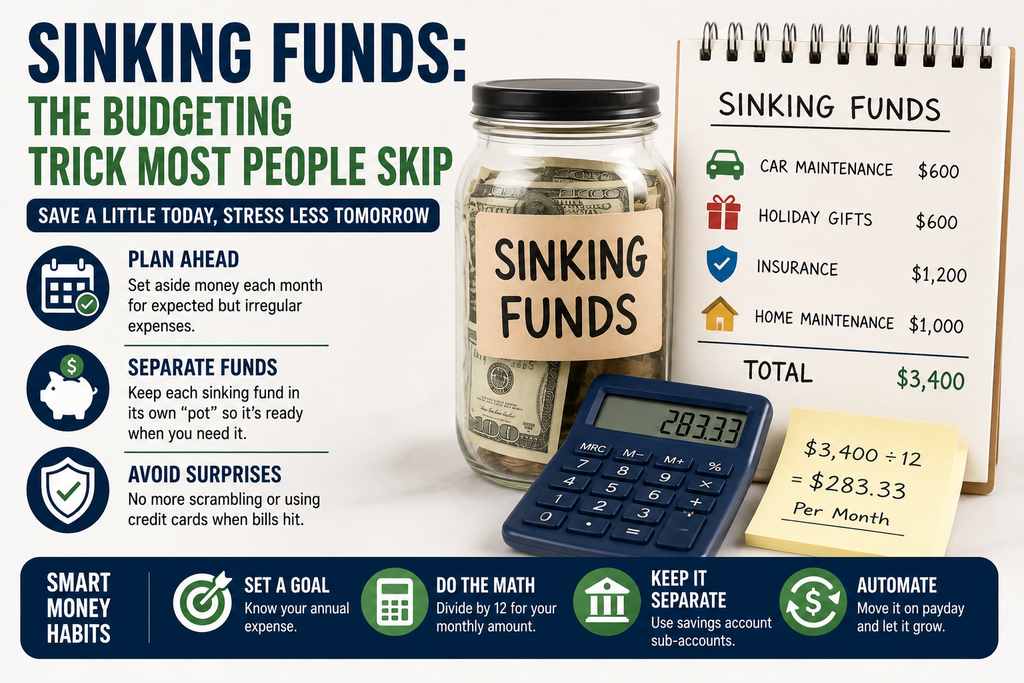
Numbers make sinking funds easier to trust than the concept alone. Say your irregular annual expenses look like this:
| Sinking Fund | Annual Cost |
|---|---|
| Car registration and maintenance | $600 |
| Holiday gifts | $600 |
| Annual insurance premium | $1,200 |
| Home maintenance | $1,000 |
| Total | $3,400 |
How the Math Works Out With Sinking Funds
Divide that $3,400 total by 12 months, and you need $283.33 a month split across your sinking funds to cover every one of these costs without touching your regular budget or an emergency fund when they come due.
Where to Keep Your Sinking Funds
These funds work best somewhere separate from your everyday checking account, so the money doesn’t quietly disappear into regular spending. A high yield savings account with sub accounts, sometimes called buckets, is the easiest setup, since many banks let you label each bucket by name and track balances individually.
Whichever bank or credit union you use, confirm it’s FDIC insured or NCUA insured up to $250,000, so the money sits somewhere federally protected while it builds. The account should stay easy to reach when the bill comes due, so this isn’t the place for a CD or an account with withdrawal penalties.
The money should stay easy to reach when the bill comes due, so this isn’t the place for a CD or an account with withdrawal penalties.
Common Mistakes With Sinking Funds
The most common mistake is lumping every sinking fund into one unlabeled account, so you lose track of how much is actually earmarked for each expense. Without labels, it’s easy to spend gift money on a car repair and end up short in December.
Another common mistake is skipping the monthly contribution once cash feels tight, which just pushes the same shortfall onto your future self when the bill actually arrives.
How to Start Sinking Funds This Week
Starting is simpler than most people expect. List every expense that hits once or twice a year, add up the annual total, and divide by 12 to get your monthly contribution.
You can run your own funds numbers against a real target date and amount with our Savings Goal Calculator, which shows exactly how much to set aside each month to hit a specific total by a specific date.
Automating the transfer on payday, even a small amount, makes sinking funds far more likely to stick than trying to remember to move money manually every month.
Bottom Line
These funds turn irregular, unpredictable expenses into small, boring monthly transfers, so the bill that used to wreck your budget becomes just another line item you already planned for.
This is for informational purposes only and isn’t financial, tax, or legal advice.

Raghu Shekar writes about personal finance, banking, Medicare, and retirement planning at SimpleUSAFinance. His goal is simple: break down the numbers people actually need — no jargon, no sales pitch — so readers can make their own decisions with confidence. When he’s not writing, he’s usually digging through the latest rate changes, tax brackets, or Medicare updates to keep the site’s calculators and guides current.