If you have watched the news this summer, you have probably seen SK Hynix stock mentioned more than once. The South Korean chipmaker priced the largest foreign share sale in US history, then swung wildly within days. For everyday investors, it is a useful real world case study in what happens when a hot company meets a hot market.
This is not a stock pick. It is a plain English walk through what happened, why the shares moved the way they did, and what the pattern can teach anyone building a long term portfolio.
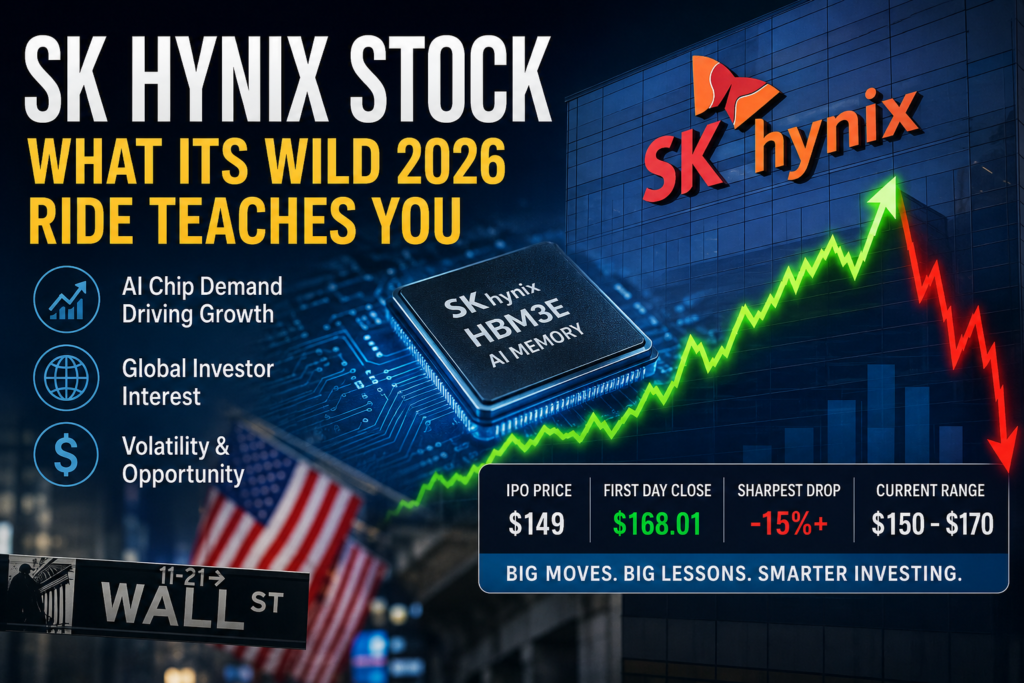
What Happened to SK Hynix Stock in 2026
SK Hynix stock began trading on Nasdaq in July 2026 after the company priced its American Depositary Receipts, or ADRs, at $149 each. The offering raised roughly $26.5 billion, the biggest first time listing by a foreign company on record.
On its first day of trading, SK Hynix stock jumped well above the offering price, closing near $168. That kind of first day pop is common for in demand IPOs, and it made early headlines feel like a clear win.
The excitement did not last. Just days later, the shares fell more than 15 percent in a single session, the steepest one day drop on record for the stock, as investors booked profits and questioned whether earnings could keep pace with the hype.
Why SK Hynix Stock Swung So Wildly After Its IPO
Three forces explain most of the movement in SK Hynix stock during its first weeks.
First, demand for memory chips used in AI servers has been intense, and SK Hynix is one of the few companies making the high bandwidth memory that powers them. That fueled early optimism.
Second, IPO pricing is imperfect. When a stock like SK Hynix’s stock is priced by bankers rather than set purely by open market trading, the first few weeks often see outsized swings as the market figures out where the price should actually settle.
Third, profit taking is normal after a big first day pop. Early buyers who saw quick gains in SK Hynix stock had every incentive to sell, which added selling pressure once the initial excitement cooled.
None of this is unique to one company. Large IPOs in fast moving sectors like semiconductors and AI infrastructure tend to attract both long term believers and short term traders in the same opening weeks, and the tug of war between those two groups is usually what drives the sharpest early swings.
What SK Hynix Stock Reveals About ADR Investing
SK Hynix stock trades in the US as an ADR, not as the actual Korean shares. That distinction matters more than most new investors realize.
An ADR is a US listed certificate that represents shares held in a foreign company. Owning it through the ADR means you are also exposed to currency swings between the US dollar and the Korean won, on top of the normal ups and downs of the business itself.
ADRs of companies like SK Hynix have also tended to trade at a premium to their home market shares, sometimes a large one, simply because US investors are paying for easier access. That premium can shrink over time, which adds another layer of risk beyond the company’s actual earnings.
SK Hynix Stock Price Timeline at a Glance
A quick table makes the swings easier to picture.
| Date | Event | Approximate Price |
|---|---|---|
| July 9, 2026 | ADR priced | $149.00 |
| July 10, 2026 | First day close | $168.01 |
| Mid July 2026 | Sharpest one day drop | Down more than 15 percent |
| Mid August 2026 | Recent trading range | Roughly $150 to $170 |
Lessons From SK Hynix Stock for Everyday Investors
You do not need to own SK Hynix stock to learn from it. The pattern applies to almost any hot IPO or high growth stock.
- Expect volatility right after a listing. New shares, especially large and heavily covered ones like this, often move more sharply in their first weeks than they will over the long run.
- A big first day pop is not a guarantee. The shares jumped 13 percent on day one, then gave much of that back within days. Chasing a hot debut can mean buying near a short term peak.
- Position size matters more than timing. Nobody can reliably call the top or bottom of a swing like this one. Keeping any single stock to a modest slice of your portfolio limits the damage if the timing goes wrong.
- Currency and premium risk are real for ADRs. If you are drawn to SK Hynix stock or similar foreign listings, understand that you are taking on more than just company risk.
Here is a simple example. Say you put $1,000 into the stock at the $149 IPO price, buying about 6.7 shares. If the price dipped to $130 during the mid July plunge, that stake would have briefly been worth about $872. At a recent price near $160, the same position would be worth roughly $1,073. Same shares, same investor, a swing of about $200 depending purely on when you happened to look at your account.
You can run your own SK Hynix stock numbers with our Stock Return Calculator, plugging in different entry prices and dates to see how much a real world swing like this one would have affected your own investment.
Should You Buy SK Hynix Stock Today
Whether SK Hynix stock belongs in your portfolio depends on your own goals, timeline, and comfort with volatility, not on headlines from its first few trading weeks.
The company sits at the center of AI related chip demand, which is a genuine long term growth story. At the same time, the shares have already shown they can move by double digits in a single session, and ADR premiums can compress even if the underlying business performs well.
If you are considering SK Hynix stock, treat it the way you would treat any single, relatively new, foreign listed holding: a smaller position sized to what you can hold through volatility, not a core building block of a retirement portfolio.
It also helps to decide your entry approach before you buy rather than while the price is already moving. Spreading purchases out over a few months, instead of committing all at once, is one straightforward way to avoid making a big decision based on a single volatile week.
Bottom Line on SK Hynix Stock
SK Hynix stock is less a story about one chipmaker and more a reminder of how new, high demand listings actually behave in the real world. The swings are wide, the headlines move fast, and the best protection is a sensible position size and a plan you can stick to regardless of which direction the price moves next.
This is for informational purposes only and isn’t financial, tax, or legal advice.

Raghu Shekar writes about personal finance, banking, Medicare, and retirement planning at SimpleUSAFinance. His goal is simple: break down the numbers people actually need — no jargon, no sales pitch — so readers can make their own decisions with confidence. When he’s not writing, he’s usually digging through the latest rate changes, tax brackets, or Medicare updates to keep the site’s calculators and guides current.