Most people never ask, because they assume the price on the page is final. Learning how to negotiate a bill you think is fixed starts with one fact: almost every recurring bill has more flexibility built in than the number printed on it suggests. Companies would rather quietly lower your rate than lose you as a customer entirely.
This guide covers how to negotiate a bill you think is fixed across the accounts where it actually works, what to say on the call, and when the answer is genuinely final.
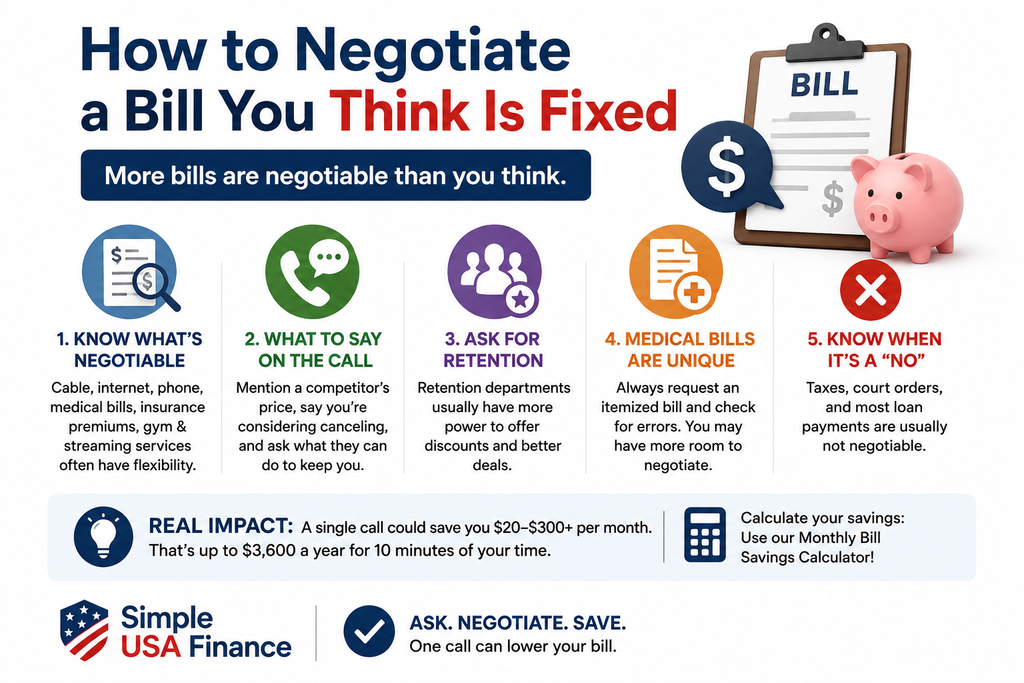
How to Negotiate a Bill You Think Is Fixed: Why It Works More Often Than You Would Guess
Retaining an existing customer almost always costs a company less than acquiring a new one through advertising and signup promotions. That gap is exactly why so many representatives are authorized to offer a discount the moment you mention canceling. Understanding how to negotiate a bill you think is fixed means understanding that incentive first.
According to Consumer Reports, members who called their cable and internet providers to ask for a lower rate regularly received discounts, extended promotional pricing, or added perks simply for asking. The posted price is a starting point, not a fixed number, which is the whole premise behind how to negotiate a bill you think is fixed.
How to Negotiate a Bill You Think Is Fixed: Bills That Are Actually Negotiable
Cable, internet, and cell phone bills are the classic examples, since these industries compete hard for new customers and often quietly match those offers for existing ones who ask. Credit card interest rates, gym memberships, and streaming bundles fall into the same category.
Medical bills, insurance premiums at renewal, and even some rent increases can also move, though the process looks different for each. Part of learning how to negotiate a bill you think is fixed is knowing which of your bills belong on this list before you pick up the phone. A quick rule of thumb: if a company profits more from keeping you than from a temporary discount, how to negotiate a bill you think is fixed usually applies.
How to Negotiate a Bill You Think Is Fixed: What to Say on the Call
Start by naming your goal directly. Tell the representative you are considering canceling and ask what they can do to keep your business at a lower rate. Mention a specific competitor’s price if you have one, since a real number is harder to wave off than a vague complaint.
Ask for the retention department by name if the first representative cannot help. Retention teams typically have more authority to approve discounts than general customer service lines, which is why so much of how to negotiate a bill you think is fixed comes down to reaching the right department.
How to Negotiate a Bill You Think Is Fixed: A Sample Script
“I have been a customer for [X years], and I noticed new customers are getting [specific offer]. I would like to stay, but I need my bill closer to that rate. What can you do for me today?”
That single script covers most of how to negotiate a bill you think is fixed for cable, internet, and phone accounts, since it states loyalty, evidence, and a clear ask in one breath.
How to Negotiate a Bill You Think Is Fixed: Medical Bills Are a Special Case
Medical bills work differently because insurers, not individuals, usually negotiate the posted rate down first. That means your hospital or provider often has real room to lower what you personally owe, especially for a self pay balance or a bill after insurance paid less than expected.
Ask for an itemized bill and check it against your insurance explanation of benefits before you negotiate anything. This step alone resolves a large share of how to negotiate a bill you think is fixed cases in medicine, since billing errors are common. The Consumer Financial Protection Bureau outlines your rights when a medical bill goes to collections, including your right to dispute charges you believe are wrong. Note that a 2025 court decision vacated the CFPB’s rule that would have removed medical debt from credit reports entirely, so a leftover balance can still affect your credit if it is not resolved.
How to Negotiate a Bill You Think Is Fixed: When the Answer Is No
Government fees, taxes, court ordered payments, and most mortgage or auto loan payments are not negotiable in the same way a subscription bill is. A representative saying a rate is fixed for these accounts is usually telling the truth, since the number is set by contract, statute, or a regulator rather than a retention budget. Knowing this boundary is as much a part of how to negotiate a bill you think is fixed as knowing what to say on a call that will actually work.
If you are told no on a bill that should be negotiable, ask to speak with a supervisor once, then try again in a few weeks. Pricing and promotions change often enough that a second attempt at how to negotiate a bill you think is fixed sometimes succeeds where the first one did not.
How to Negotiate a Bill You Think Is Fixed: A Real Example
Say your internet bill increased from $60 to $85 a month after your promotional rate expired. A single call asking for a loyalty discount and mentioning a competitor’s $50 offer often brings that bill back down to $60 or $65, a savings of $20 to $25 a month, or $240 to $300 a year, for roughly ten minutes on the phone. That single call is a complete demonstration of how to negotiate a bill you think is fixed in practice.
You can run your own how to negotiate a bill you think is fixed savings using our Monthly Bill Savings Calculator to see what a successful call could be worth over a full year.
Bottom Line
Learning how to negotiate a bill you think is fixed takes one phone call and a specific ask, and it works often enough on cable, phone, and medical bills to be worth the ten minutes. Save your energy for accounts where a human actually has authority to say yes, and expect a flat no on taxes, court ordered debts, and most loan payments.
This is for informational purposes only and isn’t financial, tax, or legal advice.

Raghu Shekar writes about personal finance, banking, Medicare, and retirement planning at SimpleUSAFinance. His goal is simple: break down the numbers people actually need — no jargon, no sales pitch — so readers can make their own decisions with confidence. When he’s not writing, he’s usually digging through the latest rate changes, tax brackets, or Medicare updates to keep the site’s calculators and guides current.