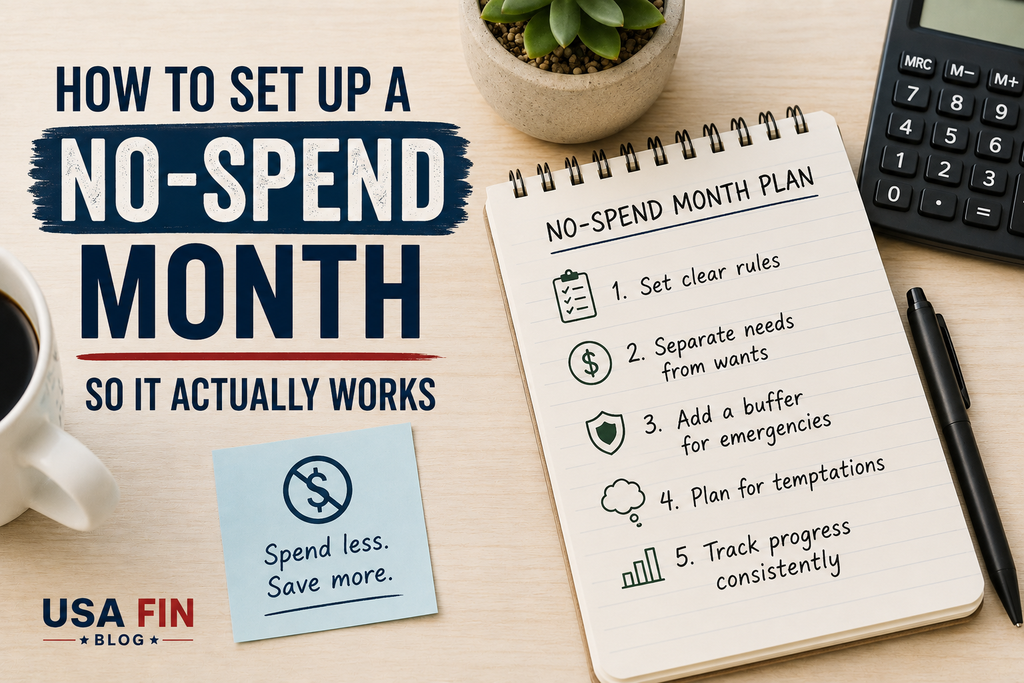
A no-spend month sounds simple until you’re three days in and realize you never actually defined what “no spending” means. Most people who try a no-spend month quit by week two, not because they lack discipline, but because they never built any rules before they started. Setting up your no-spend month correctly, before the first day, is what separates the people who finish from the people who give up.
This guide walks through exactly how to structure the challenge so it holds up against real life: bills that still need paying, temptations you already know are coming, and the boredom that hits around day ten.
Why Most No-Spend Months Fail Before They Start
The typical no-spend month collapses for one of three reasons: the rules were too vague, the fixed bills weren’t separated from discretionary spending, or there was no plan for the one temptation everyone has. A no-spend month isn’t about spending zero dollars total, since rent, groceries, and utilities don’t pause for a month. It’s about cutting the extra spending that adds up without you noticing, the small purchases that feel harmless in the moment but total hundreds of dollars by the time you actually add them up.
There’s also a psychological reason this kind of challenge is harder than it looks. Restriction without a clear endpoint or a clear reason tends to trigger the same rebellion that strict diets do. People don’t quit because they’re weak; they quit because the plan asked for more willpower than any plan reasonably should. Building real structure removes most of that burden before it ever becomes a test of willpower, which is really the whole point of planning ahead instead of just deciding to “try harder” once the month starts.
Once you understand what it’s actually targeting, the rest of the setup gets much easier. You’re not trying to freeze your entire financial life. You’re trying to isolate the categories where money leaks out the fastest.
Step 1: Pick Your No-Spend Month Rules in Advance
Before your no-spend month begins, write down exactly what counts as spending and what doesn’t. Vague rules are the single biggest reason a no-spend month falls apart by the second week. “No unnecessary purchases” is not a rule; it’s a feeling, and feelings are easy to argue with yourself out of.
Instead, write specific categories: no takeout, no new clothes, no streaming add-ons, no impulse online orders. A no-spend month with five clear rules works better than one with one vague rule, because there’s nothing left to negotiate with yourself at 9pm on a Tuesday.
It also helps to decide, in writing, what happens if you break a rule. Some people restart the day, some restart the whole month, and some simply note it and keep going. There’s no single correct answer, but deciding now, before it happens, keeps one slip from turning into an excuse to abandon the entire plan.
Sample No-Spend Month Rules Table
| Category | Allowed during a no-spend month | Not allowed |
|---|---|---|
| Groceries | Yes, budgeted amount | Restaurant delivery |
| Bills and rent | Yes, always | N/A |
| Entertainment | Free or already-paid subscriptions | New purchases, tickets |
| Clothing | Only true replacements | Anything discretionary |
| Gifts | Only pre-planned, budgeted gifts | Spontaneous gifts |
Writing this table out before day one turns your no-spend month from a vague intention into a document you can actually check against when you’re unsure.
Step 2: Separate No-Spend Month Categories From Fixed Bills
A no-spend month only works if you’re honest about what’s actually optional. Rent, minimum debt payments, insurance, and utilities aren’t part of the challenge; they keep running whether or not you’re doing a no-spend month. Trying to cut them anyway usually backfires and makes the whole month feel impossible, since you end up either missing a payment or quietly breaking your own rules within the first week.
This step is also where most people discover their real numbers for the first time. Listing every fixed bill next to every discretionary category, side by side, often reveals categories that look small individually but add up to a surprising monthly total once combined.
List your fixed bills first, then build your rules around everything left over. This step alone prevents the most common failure mode, which is treating a no-spend month like an all-or-nothing freeze instead of a targeted cut to discretionary spending.
Step 3: Build a No-Spend Month Buffer Into Your Budget
Every no-spend month needs a small buffer for the unavoidable: a car repair, a prescription, a genuine emergency. Without one, the first surprise expense feels like the whole month has failed, and that feeling is often what causes people to abandon a no-spend month entirely rather than just adjusting.
Set the buffer amount before you start, write it down next to your rules, and treat it as part of the plan rather than a failure if you use it. This kind of buffer makes the whole month far more realistic than one that assumes nothing unexpected will happen in 30 days.
Step 4: Plan for the No-Spend Month Temptations You Already Know About
You already know what’s going to tempt you. Maybe it’s a recurring coffee run, a habit of online shopping when you’re stressed, or a friend group that always suggests dinner out. A no-spend month that ignores your specific triggers is set up to fail from the start.
Write down your top two or three temptations and decide, in advance, what you’ll do instead. If your no-spend month trigger is stress shopping, decide now what replaces that habit for 30 days, whether it’s a walk, a phone call, or simply closing the tab. Deciding in the moment rarely works as well as deciding ahead of time.
Social situations deserve their own plan too. If your friends usually suggest a restaurant, decide now whether you’ll suggest something free instead, bring your own food, or simply explain that you’re on a spending break this month. Most people are more understanding than you’d expect, and having a script ready removes the awkward improvising that often leads to an easy yes and a broken rule.
Step 5: Track Your No-Spend Month Progress Without Obsessing
Checking your bank balance every hour during a no-spend month usually backfires, turning the challenge into a source of anxiety instead of a tool. Pick one check-in time, once a day or a few times a week, and stick to that instead. Consistent, light tracking beats constant, stressful tracking.
A simple spreadsheet or notes app entry is enough to track a no-spend month; you don’t need anything elaborate. What matters more than the tool is consistency: the same check-in time, the same short list of categories, reviewed the same way each time, so tracking never becomes its own source of stress. Run your own no-spend month numbers with our budget calculator to see exactly how much a single month of cut discretionary spending could add to your savings.
Bottom Line: Make Your No-Spend Month Repeatable
A no-spend month works when the rules are specific, the fixed bills are separated out, a buffer exists for real emergencies, and your known temptations have a plan attached before day one. Set it up this way once, and your next no-spend month gets easier every time you repeat it.
Please check our articles on our site in ” Personal Finance ” Section
This is for informational purposes only and isn’t financial, tax, or legal advice.

Raghu Shekar writes about personal finance, banking, Medicare, and retirement planning at SimpleUSAFinance. His goal is simple: break down the numbers people actually need — no jargon, no sales pitch — so readers can make their own decisions with confidence. When he’s not writing, he’s usually digging through the latest rate changes, tax brackets, or Medicare updates to keep the site’s calculators and guides current.