Your Medicare Part B premium isn’t picked out of thin air. It’s set by a formula tied to what Medicare expects to spend on doctor visits and outpatient care that year, then adjusted upward if your income crosses certain lines. In this article, you’ll learn exactly how the standard Medicare Part B premium is set, what the 2026 numbers are, and why some people pay several times more than others for identical coverage.
What the Medicare Part B Premium Actually Covers
The Medicare Part B premium pays for outpatient care: doctor visits, lab work, durable medical equipment, and some home health services. Unlike Part A, which most people get without a monthly bill, almost everyone pays it directly, usually deducted straight from a Social Security check. Understanding what drives this cost each year makes the annual increase less of a surprise.
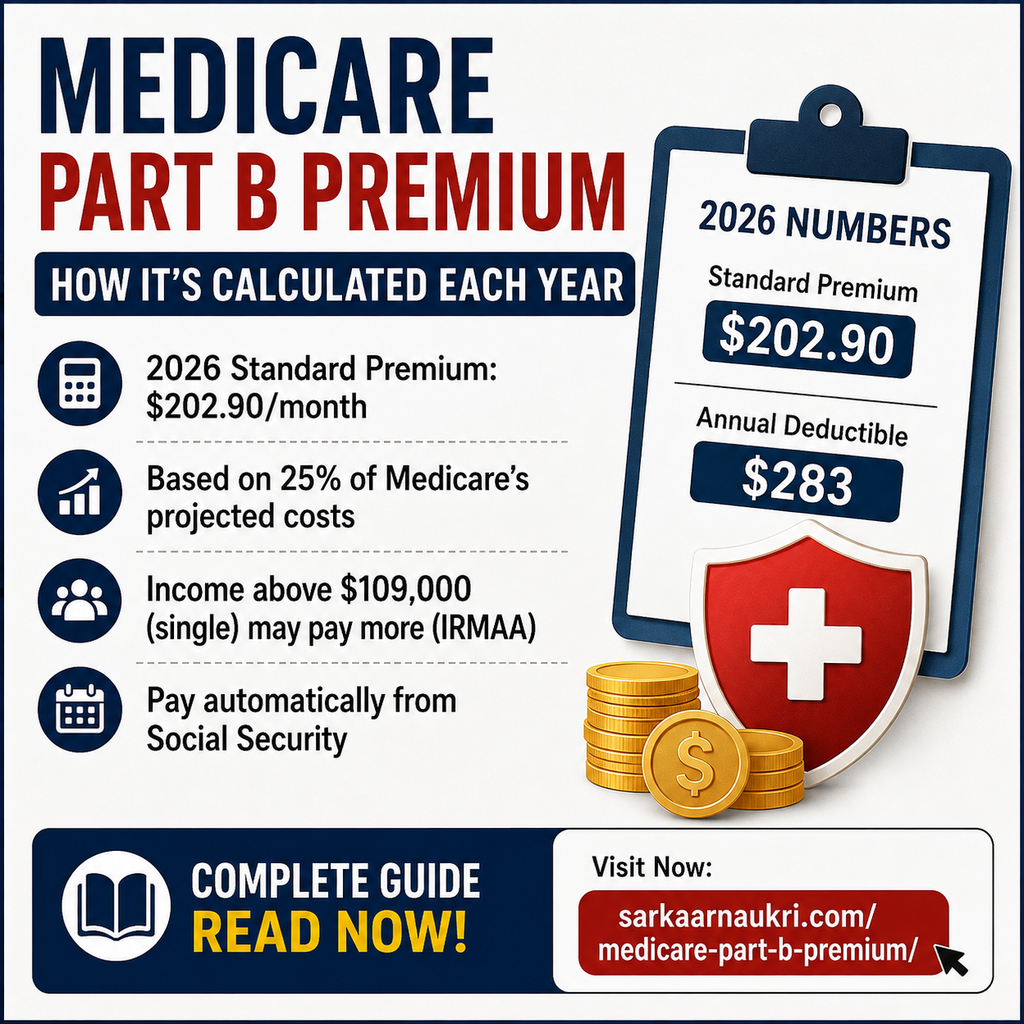
For 2026, the standard Medicare Part B premium is $202.90 a month, up from $185.00 in 2025 — a $17.90 increase, or just under 10%. The annual Part B deductible also rose, to $283, up from $257 the year before. Together, these two Medicare Part B costs shape what most enrollees actually pay out of pocket before their coverage kicks in fully.
How the Standard Medicare Part B Premium Is Calculated
Each year, Medicare’s actuaries estimate the total cost of Part B services for the coming year, called the “monthly actuarial rate.” For 2026, that rate is $405.40 per aged enrollee. The standard Medicare Part B premium is set at roughly 25% of that projected cost, plus a small repayment adjustment — the government covers the remaining share out of general tax revenue.
That 25% share is why it rises most years: it moves in step with projected healthcare spending, not with inflation or your Social Security cost-of-living adjustment. When Medicare expects doctor visits, procedures, and equipment costs to rise, the Medicare Part B premium rises with it. CMS noted that without a change to how certain skin substitute products are reimbursed, the 2026 Medicare premium increase would have been roughly $11 a month higher than it turned out to be.
A Quick Numeric Example
Here’s the math behind the 2026 Medicare Part B premium, simplified:
| Item | 2026 Amount |
|---|---|
| Monthly actuarial rate (aged enrollees) | $405.40 |
| Standard Part B premium (≈25% + small repayment adjustment) | $202.90 |
| Annual Part B deductible | $283.00 |
If you pay the standard rate all year, that’s $202.90 × 12 = $2,434.80 in Medicare Part B premium payments alone, before you’ve paid a dollar toward the deductible or any coinsurance on top of it.
Why Some People Pay More: IRMAA Explained
If your income is above a certain threshold, you don’t pay the standard Medicare Part B premium — you pay more, through something called the Income-Related Monthly Adjustment Amount, or IRMAA. IRMAA is layered on top of the base Medicare Part B premium based on your modified adjusted gross income (MAGI) from your tax return two years prior, so your 2026 premium is based on your 2024 income.
For 2026, IRMAA starts once MAGI exceeds $109,000 for single filers or $218,000 for joint filers. Here’s how the tiers break down:
| Individual MAGI | Joint MAGI | Total Monthly Premium |
|---|---|---|
| Up to $109,000 | Up to $218,000 | $202.90 |
| $109,001–$137,000 | $218,001–$274,000 | $284.10 |
| $137,001–$171,000 | $274,001–$342,000 | $405.80 |
| $171,001–$205,000 | $342,001–$410,000 | $527.50 |
| $205,001–$499,999 | $410,001–$749,999 | $649.20 |
| $500,000+ | $750,000+ | $689.90 |
Roughly 8% of Medicare beneficiaries pay an IRMAA-adjusted Medicare Part B premium. If your income dropped since the tax year used to calculate your IRMAA — due to retirement, divorce, or another qualifying life event — you can appeal using Social Security Form SSA-44 rather than simply accepting the higher Medicare Part B premium. If you want to see exactly where your income lands, run your own numbers with our IRMAA Calculator before your next enrollment decision.
How Your Medicare Part B Premium Gets Paid
Most people never write a check for their Medicare Part B premium — it’s deducted automatically from their monthly Social Security, Railroad Retirement, or Civil Service Retirement benefit. If you’re not yet collecting Social Security, or your benefit isn’t large enough to cover it, Medicare bills you directly instead, usually quarterly.
One protection worth knowing: the “hold harmless” provision limits how much your Medicare Part B premium can increase for existing enrollees compared to your Social Security cost-of-living raise. This protection doesn’t apply to everyone, though, and it never stops IRMAA surcharges from applying in full.
What This Means for Your Budget
A Medicare premium increase of nearly 10% in a single year can eat into a fixed retirement income fast, especially if your Social Security cost-of-living adjustment doesn’t keep pace. Building the standard Medicare Part B premium, plus a buffer for IRMAA if your income is near a threshold, into your annual retirement budget is a simple way to avoid an unwelcome surprise each January when the new rate takes effect.
If you’re approaching a MAGI threshold, even a modest Roth conversion or extra capital gain in a given year can push your Medicare Part B premium into a higher IRMAA tier two years later — so it’s worth checking where your income sits before making large financial moves in retirement.
Bottom Line
The Medicare Part B premium isn’t arbitrary. It’s recalculated each year at roughly a quarter of projected Part B spending, which is why it tends to climb along with healthcare costs. For 2026, that means $202.90 a month for most people, with IRMAA pushing it as high as $689.90 for higher earners.
Please check our latest calculators
This is for informational purposes only and isn’t financial, tax, or legal advice.

Raghu Shekar writes about personal finance, banking, Medicare, and retirement planning at SimpleUSAFinance. His goal is simple: break down the numbers people actually need — no jargon, no sales pitch — so readers can make their own decisions with confidence. When he’s not writing, he’s usually digging through the latest rate changes, tax brackets, or Medicare updates to keep the site’s calculators and guides current.